Will Kim Jong-un Resign
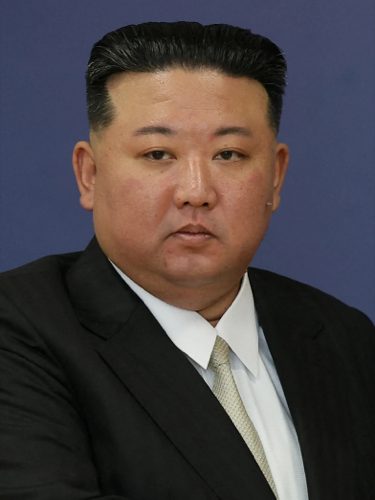
Kim Jong Un is not expected to resign from his position as Supreme Leader of North Korea.
His leadership is hereditary with no established term limit within the Workers Party of Korea.
Hereditary leadership of North Korea with no term limit.
The Hereditary Nature of Leadership
Kim Jong Un has served as Supreme Leader of North Korea since 2011, inheriting the position from his father, Kim Jong Il, in a succession established through a dynastic system. This model of hereditary leadership dictates no fixed term limit, making voluntary resignation from office highly improbable within the current political framework. His authority is absolute, deeply embedded in the state apparatus and the Workers Party.
Current State of Power and Influence
Despite North Korea's isolated status, Kim Jong Un maintains a firm grip on internal power and policy direction, though his external influence score is 26/100, reflecting international perceptions of the country's limited global reach. GeoGazet tracking shows North Korea as the top connection by signal volume with 86 tracked signals, indicating persistent international attention on the regime itself. This focus underscores the regime's singular leadership under Kim Jong Un and its continued prominence in regional security dialogues.
Strategic Priorities and Regime Stability
Kim Jong Un's leadership priorities remain centered on military strength and national defense, particularly regarding its nuclear program. Recent signals highlight this: "North Korea’s nuclear machine is getting bigger: A new uranium facility, thousands of centrifuges and missiles capable o" confirms ongoing expansion. Furthermore, "North Korea fires ballistic missiles toward sea after rivals’ military drill it sees as provocation" illustrates the regime's consistent use of military demonstrations, driven by the Supreme Leader, to assert its sovereignty and deter external threats.
Potential for Unforeseen Change
While voluntary resignation is not a feature of North Korea’s political system, any change in leadership would likely stem from unforeseen circumstances rather than a scheduled or requested departure. Health issues or internal power struggles, while not openly discussed, represent the primary avenues through which leadership transitions occur in such an opaque and authoritarian state. As of 2026, there are no public indications of such imminent events.