How Long Will Narendra Modi Stay in Office
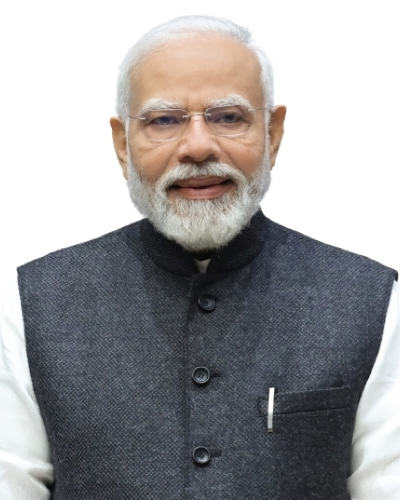
Narendra Modi is the Prime Minister of India, with his current term extending until the next general election due in 2029.
India's constitution does not set term limits for the prime minister.
India sets no term limit for the prime minister. The next general election is due in 2029.
The Current Mandate and Constitutional Framework
Prime Minister Narendra Modi is currently serving his second consecutive term as the head of government in India, having first taken office in 2014. His present mandate is slated to continue until the next general election, which is constitutionally due in 2029. A fundamental aspect of India's democratic framework is the absence of any prescribed term limits for the prime minister. This constitutional provision means that a prime minister can remain in office for an indefinite number of terms, provided they continue to secure electoral victory and maintain the confidence of the Lok Sabha, the lower house of India's Parliament. Therefore, the 2029 general election represents the next definitive juncture for a potential change or continuation of leadership.
Political Landscape and Electoral Prospects
The political landscape in 2026 is already being shaped by the anticipation of the 2029 elections, with various signals indicating the ongoing competition for public opinion. GeoGazet tracking reveals significant political messaging, such as Home Minister Amit Shah's statement hailing "12 years of Modi govt," wherein he declared an end to "corruption, casteism, dynastic politics." This reflects the ruling party's efforts to consolidate its narrative and highlight its achievements over more than a decade in power. Conversely, during the BRICS Summit 2026, the opposition Congress party urged "stronger Indian leadership" and called for the Modi government to "prioritise Global Sou," illustrating their strategic positioning and critique of the current administration's foreign policy approach. These contrasting statements underscore the polarized nature of political discourse leading up to the next electoral contest. Further, a signal from the BRICS Summit 2026 about "Modi Govt cuts VIP convoy rush as Ministers, CMs unite for a single bus ride in New Delhi" might reflect attempts at projecting an image of efficiency or populism.
Broader Influences and Future Scenarios
Beyond direct electoral competition, Prime Minister Modi's potential longevity in office will be influenced by a complex interplay of domestic governance, economic performance, and India's geopolitical standing. GeoGazet tracking indicates a current influence score of 10 out of 100 for the Prime Minister, alongside top connections by signal volume for India (97 tracked signals), Economy & Rates (7 tracked signals), and the United States (6 tracked signals). These metrics, derived from a total of 100 tracked events, highlight the broad array of issues and relationships pertinent to India's leadership. Should the Bharatiya Janata Party, under Modi's leadership, secure a majority or form a stable coalition in 2029, he would be constitutionally eligible to continue as prime minister. However, any shift in voter sentiment, the emergence of strong opposition alliances, or unforeseen domestic or international developments could alter this trajectory. The robust democratic process in India ensures that the ultimate decision rests with the electorate in 2029.