대만 해협의 중요성
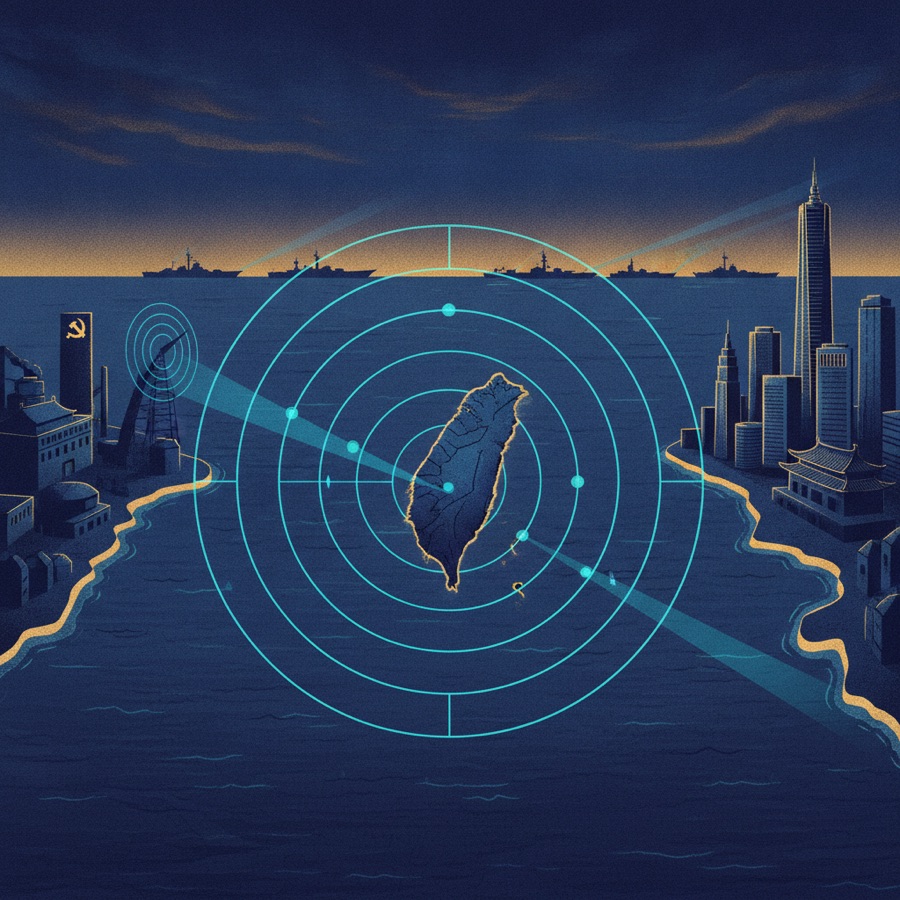
타이완 해협은 세계에서 가장 중요한 해운 통로이자 미국의 중심지입니다.
연간 5조 달러의 지역 무역에 대한 접근을 통제하는 중국 군사 경쟁.
전체 보고서 읽기줄여서 보기
지정학적 압력점
타이완 해협은 타이완을 중국 대륙과 약 100마일의 물로 분리하며, 인도태평양 지역의 주요 긴장 지점이 되고 있습니다. 현재 정보 추적에 따르면 타이완에서 발신되는 73개의 추적 신호와 중국에서 발신되는 54개의 신호가 있으며, 이는 양측이 이 수로에 대해 유지하는 강렬한 모니터링과 전략적 초점을 반영합니다. 미국은 이 지역에서 단 4개의 추적 신호만 유지하고 있지만, 해협을 통한 미국 해군 작전은 베이징과의 마찰의 핵심 지점으로 남아 있습니다. 후티군의 최근 유조선 공격이 지역 불안정이 에너지 흐름을 방해할 수 있음을 보여주는 호르무즈 해협과 달리, 타이완 해협은 두 개의 핵무장 국가로부터 직접적인 군사 압력에 직면해 있습니다.
무역 및 반도체 통제
Roughly 40 percent of global semiconductor manufacturing occurs on Taiwan, with the island's facilities producing 92 percent of the world's advanced chips. Ships carrying these components, along with broader manufactured goods, must pass through or near the Taiwan Strait to reach markets in North America, Europe, and the Middle East. The strait also serves as a critical waypoint for oil shipments from the Middle East destined for Japan, South Korea, and other Asian economies. Any disruption to this corridor would immediately trigger global supply chain collapse comparable to the effects seen during the 2022 energy crisis in the Strait of Hormuz, where tanker attacks forced rerouting of petroleum supplies.
군사적 차원 및 강대국 경쟁
China has deployed over 2,400 missiles aimed at Taiwan and conducted increasingly large military exercises designed to practice invasion scenarios. The United States responds by conducting freedom of navigation operations through the strait, with destroyers regularly transiting the waterway to assert international law and challenge Beijing's territorial claims. Taiwan maintains a defensive military posture but lacks the capacity to independently defend against a sustained Chinese military campaign without external support. The current influence score for the Taiwan Strait region registers at 6 out of 100 in tracking assessments, indicating that despite its strategic importance, actual military conflict remains probabilistic rather than imminent.
전략적 함의
The Taiwan Strait determines whether the U.S. maintains security commitments in the Indo Pacific or whether China achieves regional hegemony. Any Chinese military action against Taiwan would likely trigger American intervention, creating the potential for direct great power conflict. For this reason, Taiwan Strait stability directly affects security calculations across Japan, South Korea, Australia, and the Philippines. The waterway represents not merely a commercial route but the boundary line between two competing visions of regional order, making it the central geographic feature defining geopolitics in the 2020s.