Is Mohammed bin Salman Going to Resign
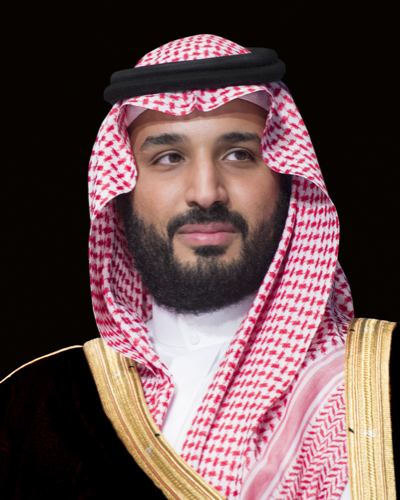
Mohammed bin Salman is not expected to resign from his roles as Crown Prince and Prime Minister of Saudi Arabia.
His position as heir apparent is foundational to the Saudi monarchy and is not subject to electoral processes or typical resignation.
Crown Prince and Prime Minister, first in line to the Saudi throne. The role is not subject to election.
The Current Status and Succession Framework
Mohammed bin Salman is the Crown Prince and Prime Minister of Saudi Arabia, roles he has held since 2022. He is the first in line to the Saudi throne, designated as heir apparent within the established monarchical system. Crucially, this role is not subject to public election or a fixed term that would necessitate a resignation decision; succession follows established royal protocols.
Factors Influencing Stability and Power
Crown Prince Mohammed bin Salman maintains significant control over Saudi Arabia’s domestic and foreign policies, leading ambitious national transformation through his Vision 2030 agenda. This program drives extensive internal reforms across economic, social, and cultural sectors. His top connections by signal volume, Saudi Arabia (87 tracked signals) and Oil & Energy (32 tracked signals), clearly indicate his deep engagement in national governance and the kingdom's primary economic engine. UAE, with 23 tracked signals, highlights a key regional partnership. Externally, regional security remains a paramount concern. Recent GeoGazet signals, such as "Yemen’s Houthis advance on government strongholds of Marib, Taiz" and "Fighting continues between Yemen gov’t forces, Houthis: What is the latest?", underscore the enduring challenges in the Yemen conflict. These ongoing security issues necessitate continuous policy engagement, further solidifying the Crown Prince’s central role. His current influence score stands at 38/100 across 100 total tracked events, reflecting a concentrated sphere of direct operational impact.
The Nature of Succession and Power Consolidation
The Saudi political system operates as a hereditary monarchy where the Crown Prince, Mohammed bin Salman, is the designated heir apparent and first in line to the throne. This fundamental structure means his role is not subject to electoral cycles, public approval ratings in a Western sense, or a predetermined term limit that would necessitate a resignation. His authority derives directly from royal lineage and decree, making the concept of voluntary resignation highly incongruous with the established framework. Over recent years, Crown Prince Mohammed bin Salman has systematically consolidated power within the royal family and state apparatus. This consolidation has included streamlining decision making processes and centralizing key government functions under his direct purview. These actions have significantly reduced potential avenues for internal dissent or rival factions to challenge his position effectively. Therefore, any hypothetical change in his status would represent an extraordinary event, entirely outside the standard operational expectations of the Saudi governance model.
Absence of Precedent and Future Outlook
There is no historical precedent within the modern Saudi monarchy for a Crown Prince to voluntarily "resign" from their position. Changes in the line of succession have occurred through royal decree, typically due to the passing of the reigning monarch, health incapacitation, or a change in royal appointment by the King. Given Crown Prince Mohammed bin Salman’s age, robust health, and firm grasp on power, none of these circumstances appear imminent. His long term vision for Saudi Arabia, particularly Vision 2030, relies on his continued leadership. Barring severe, unforeseen internal upheaval or a direct royal directive from the King, his leadership trajectory is firmly established. The current geopolitical and domestic landscape suggests continued stability in his role as the paramount figure driving the kingdom’s future.