How Long Will Kim Jong-un Stay in Office
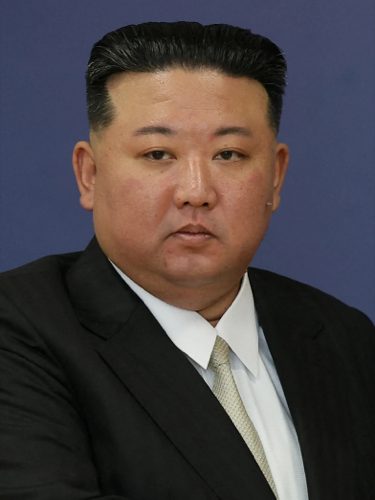
Kim Jong Un holds office as Supreme Leader of North Korea indefinitely because the country operates under a hereditary leadership system with no official term limits.
He has served in this role since 2011.
Hereditary leadership of North Korea with no term limit.
The Indefinite Nature of Hereditary Leadership
Kim Jong Un's tenure as Supreme Leader is not bound by term limits, a direct result of North Korea's unique political structure which designates leadership through a dynastic succession. As the third generation of the Kim family to rule, his position is fundamentally hereditary, ensuring a mandate that extends until his death or incapacitation. This system contrasts sharply with most modern states that employ fixed terms and democratic elections, granting Kim Jong Un a secure and open ended term in office.
Factors Influencing Leadership Stability
The stability of Kim Jong Un's leadership is predominantly influenced by domestic control and the regime's ability to manage external pressures. Domestically, his authority rests on absolute control over state institutions, the military, and the Workers' Party of Korea. Externally, North Korea's nuclear program and its relations with neighboring states are central to its geopolitical standing, with "Nuclear Weapons" tracking 58 signals and "South Korea" tracking 36 signals as top connections by signal volume. GeoGazet tracking indicates ongoing significant developments, such as recent signals stating, "North Korea’s nuclear machine is getting bigger: A new uranium facility, thousands of centrifuges and missiles capable o." This underscores the regime's focus on military strength as a cornerstone of its survival and Kim Jong Un's continued rule.
External Relations and Internal Control
North Korea's actions on the international stage often serve to consolidate internal power and project strength. The regime regularly conducts military exercises and missile tests, which are characterized by signals such as, "North Korea fires ballistic missiles toward sea after rivals’ military drill it sees as provocation." These displays reinforce the regime's security narrative and deter external interference, while also demonstrating Kim Jong Un's firm grip on the military and national policy. His current influence score is 26 out of 100, which reflects a contained and domestically focused power base despite its international impact. The regime's comprehensive control over information and its populace minimizes internal dissent, further ensuring his long term hold on power.
Potential Succession and Future Outlook
In the event of a leadership change, North Korea's hereditary system suggests that succession would likely occur within the Kim family, although the exact mechanisms remain opaque. The regime's longevity has been predicated on the uninterrupted transfer of power along dynastic lines. While external pressures and internal dynamics constantly evolve, the fundamental structure of North Korean governance prioritizes the Kim family's rule. With a total of 100 tracked events in GeoGazet graph, the state remains highly active under its current leadership, indicating a robust and persistent internal political system.