Why Is Kim Jong Un Still in Power
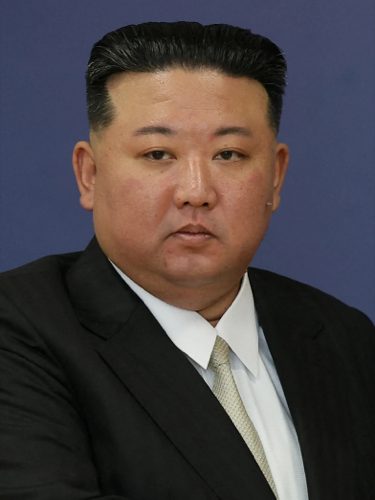
Kim Jong Un remains in power due to his absolute control over North Korea's military and Workers' Party, reinforced by dynastic legitimacy and a highly repressive security state.
His regime prioritizes nuclear weapons development as a key deterrent, solidifying his perceived strength both internally and externally.
Hereditary leadership of North Korea with no term limit.
Internal Stability and Dynastic Rule
Kim Jong Un inherited power through the Baekdu Bloodline, a foundation of his legitimacy. He commands the Korean People's Army and the Workers' Party, maintaining a pervasive surveillance and control apparatus over the populace. His influence score is 45/100, reflecting the consolidated nature of his authority within North Korea.
Nuclear Ambition and External Leverage
North Korea's nuclear weapons program is central to Kim Jong Un's power projection and regime survival. The IAEA confirms North Korea has built new uranium facilities to expand its nuclear arsenal. This strategic focus, evident in "IAEA exposes secret new Kim Jong Un uranium plant built to boost warheads", strengthens his bargaining position internationally and justifies a heavily militarized state internally.