Nơ-ren-đra Mô-đi so với Tập Cận Bình
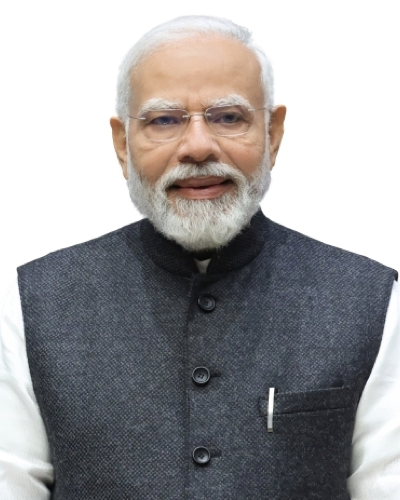
Nê-rên-đra Mô-đi nắm giữ quyền lực chính thức lớn hơn trong hệ thống của ông ấy với tư cách là Thủ tướng Ấn Độ kể từ năm 2014, trong khi Tập Cận Bình điều hành kiểm soát bộ máy nhà nước rộng lớn hơn với tư cách là Chủ tịch nước Trung Quốc và Tổng Bí thư Đảng Cộng sản Trung Quốc kể từ năm 2013.
Cả hai đều phải đối mặt với áp lực chính trị nội bộ, mặc dù các ràng buộc thể chế của họ khác nhau về cơ bản.
Đọc báo cáo đầy đủHiển thị ít hơn
Quyền lực Hiện tại và Vị trí Hiến pháp
Modi serves as Prime Minister of India under a parliamentary system where executive power is distributed across multiple institutions. He has held this role since 2014 and faces no constitutional term limit; India's electoral system permits indefinite reelection. Xi Jinping occupies a more concentrated power structure as both President of China and General Secretary of the Communist Party, roles he has held since 2013. China removed presidential term limits in 2018, formally eliminating institutional checks on his tenure. On raw authority measures, Xi commands a single party apparatus controlling all state functions, while Modi operates within a competitive multi party democracy requiring coalition management and legislative consensus.
Ổn định Nội bộ và Áp lực Chính trị
Both leaders currently face significant domestic friction. Recent tracking data shows mass protests in India demanding the resignation of the poll chief, with fresh demonstrations shaking the country over voter roll management across multiple days. These represent direct challenges to Modi's electoral credibility and institutional integrity at a critical moment. India's influence score in current assessment stands at 11 out of 100, reflecting substantial internal constraint. Xi faces different but parallel pressures within the Communist Party ahead of the 2027 Party Congress, though China's controlled information environment obscures public protest data comparable to India's open reporting. The next Indian general election is scheduled for 2029, creating a defined electoral accountability mechanism Modi cannot avoid.
Định vị Quốc tế và Quỹ đạo Kinh tế
Modi's administration confronts immediate economic and technology policy challenges reflected in tracked signals emphasizing chips and technology bans alongside broader economy and rates concerns. India maintains 99 tracked signals reflecting substantial democratic discourse around policy direction. Xi's position relative to US chip export controls and technology decoupling represents a permanent structural challenge requiring constant party alignment to maintain. Neither leader currently commands the geopolitical influence their nations possessed at previous periods, with both facing rising costs of domestic legitimation.
Con đường Phía trước Từ năm 2027 đến năm 2029
Modi will face electoral renewal in 2029, creating measurable institutional pressure to demonstrate governance success before then. This timeline forces performance validation through democratic mechanisms. Xi must navigate the 2027 Communist Party Congress without equivalent electoral accountability, though succession planning and factional management remain consequential. The trajectory for both shows consolidation of power within their respective systems, but Modi operates under greater transparency and reversibility than Xi. Both leaders are now in their mid to late tenure, facing the structural tests that define whether their consolidations endure.